Mostrando las entradas con la etiqueta Nivel 6 La Punta - Prof Mariela. Mostrar todas las entradas

lunes, 27 de abril de 2020

27/4

Hello ,How have you been? I hope you are fine ! Today we are going to practice for the test.

Meme Maker - OMGOSH


Unit 1 :

a. Complete the sentences with the correct form of the phrasal verbs 
get on with - hang out - break up - dig up - freeze up- come along- hand down - hear from 

1. Kerry, we are going to the supermarket. Why don’t you with_______________ us? 
2. When Sean saw Alice for the first time, he _____________________ and didn’t know what to say. 
3. The antique desk has been ____________________ through my mother’s side of the family. 
4. The workmen will have to__________________ the road carefully. There may be an ancient wall below it. 
5. How are you___________________________ the people at work nowadays? 
6. It is sad that George and Sally have______________________ after three years together. 
7. Do you expect to______________________ Jack this weekend? If you do, please say ‘hi’ to him from me. 
8. I’ll be home at about 10 o’clock, Mum. I am going to____________________ with the guys until then.

b. Complete the sentences below using the verbs in brackets in the correct Present tense. 

1. Robin _________________(take) his break at the moment.
2. Jane _______________ (eat) fruit for breakfast every day, but today she ___________ (have) plain coffee.
3. The bus ______________________(come) late every morning.
4. Laura _____________ (work) in Milan this week.
5. Lyn _______________ (have) a flamenco class on Mondays.
6. I ____________(not understand) why I never _________(get) enough sleep.
7. Excuse me,_____________ (you / use) this chair?
8. Can you see if Debbie________________ (play) in the back garden?
9._____________________ (you / think) we can meet earlier? My sister______________ (come) tonight.
 c.  Complete the spaces with the correct form of use to /be use to /get use to.
   a. The Romans ___________ wear long robes called togas.
    b. When you went to Canada in winter, did it take you long to ___________ the climate?
    c.Napoleon never ___________ a telephone.
    d.She went to a Chinese restaurant but she ___________ eating with chop sticks and had to ask the waiter for a fork.
    e.  I often ___________ a credit card to pay in restaurants
    f. In the 19th century, factory workers in England ___________ work 10 or more hours a day  but they didn't 
     ____________ work on a Sunday.
    g.There ___________ be a wall across Berlin.
    h. A long time ago French people ___________ drink soup for breakfast but now they drink coffee.

      That's all for today !


miércoles, 22 de abril de 2020

22/4

 Welcome back : Let's continue working with Modal

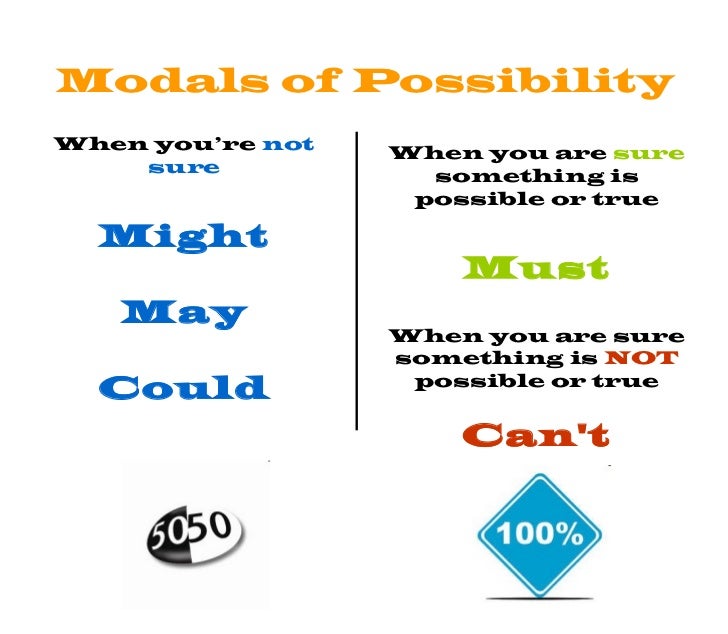
Expressing possibility and making deductions:


Modals of Possibility and Certainty

Could/May/Might express something wil probably happen ,you are not sure.

Must : express that we are almost sure about something is true or possible.

Can; you believe that something is impossible or not true.

Now ,let's go to the student's book

Page 44

Reading: read and do exercise b.

Page 45

Read again thentext on page 44 and complete exercise c and d.

Vocabulary :
Expression with MAKE or DO .complete the exercise and copy the expressions in your notebook.

3.Nouns deriving from verbs:nouns are formed by adding a suffix such as -ion,-ation,-ment to a verb.

Page 46
b. complete the sentences with the following words adding a suffix to make nouns.

Grammar:complete the grammar chart and do the practice exercise.

English in use:

Complete using the word given so that the second sentence has a similar meaning to the first sentence.Ex: 1. Charlie has been woring for this company for five years.


That's all for today ,stay hoem ,take care!

lunes, 20 de abril de 2020

20/4

 
Welcome back !


Student's book :

PAGE 40

Read and complete exercise C.

PAGE 41

Read again the text on page 40 and complete exercise d.

Vocabulary;

Read a and complete exercise b.

GRAMMAR: This is a review of must-have to- need and would rather- had better.Read it carefully and complete the Practice exercise.

PAGE 43

Writing: complete exercises b and c. Read carefully exercise d and the Tip chart, then write and informal letter telling a friend of yours, who have recenty moved toanother country, your news.
The letter must have all the points mentioned in d.

Workbook page 24, 25(only vocabuary),26

miércoles, 15 de abril de 2020

15/4

 WELCOME BACK!

LET'S START UNIT 3 ,STUDENTS' BOOK


Page 38 

Read and complete the exercises including exercise d on page 39.

Watch the video 

Now go to page 39

There you will find a grammar explanation ,read it carefully and copy it in your notebook.
Complete practice exercise to check your knowledge.
Complete the vocabulary part too.

Page 40 Read and complete exercise c.

Page 41 

d. Match the  highlighted words or phrases with their meanings,then copy the in your notebook.
Vocabulary: do exercise a and b.

Grammar: there is a review .Read it carefully and complete the activities. Then do Practice exercise..

Workbook: Pages 22,23 and 24 .


Have a great week and take care !


lunes, 13 de abril de 2020

13/4

  KEEP CALM AND WELCOME TO ENGLISH CLASS - Keep Calm and Posters ...

April 13 th 

Watch the following video and do the listening exercise :


We have finished Unit  2 so, to revise the contents you are going to work in the following  pages:

Student's book page 34 and 35 (round up )

Workbook page 18,19,20 and 21

If you have any doubt ,contact me . 


miércoles, 8 de abril de 2020

8/4

 Colours 1° A 1°B 1° C - Lessons - Tes Teach

Student's book page 30

ADJECTIVES AND ADVERBS OF MANNER


COMPARISONS

Grammar explanation:

There are several different ways to compare things in English. We can also modify comparisons to show big or small differences.

Comparing:
We can use comparative adjectives to compare different things.

Max is taller than Judy.
You're more patient than I am.
His first book is less interesting than his second.

We can use as … as with an adjective to say that two things are the same, or not as … as to say that one thing is less than another. 

Her hair is as long as mine.
It's not as sunny as yesterday.

We can also use expressions like different from, similar to and the same as.

England is different from the United Kingdom.
His car is similar to mine.
The results from the first test are the same as the results from the second.

Showing big differences:

We can use much, so much, a lot, even or far with comparative adjectives.

Sales in July were a lot higher than sales in June.
He was far less experienced than the other applicant.

We can use nowhere near with as … as.

The interview was nowhere near as difficult as the written exam.

We can use very, really, completely or totally with different from.

They may be twins, but they're completely different from each other.

Showing small differences:

We can use slightly, a little, a bit, a little bit or not much with comparative adjectives.

The number of registrations has been slightly lower than we expected.
Houses in my city are not much more expensive than flats.

We can use almost, nearly, not quite, roughly, more or less or about with as … as and the same as.

She's almost as old as I am.
The figures for May are more or less the same as the figures for June.

We can use very or really with similar to.

My son looks really similar to my father when he was that age.

Showing there is no difference:

We can use exactly the same as or just as … as to emphasise that there is no difference.

My grandma's cakes still taste exactly the same as when I was a child!
A new phone can be just as expensive as a new computer these days.


STUDENT'S BOOK PAGE 30 (PRACTICE AND ENGLISH IN USE)

PAGE 32 EXERCISE B AND C .

PAGE 33 COMPLETE THE WHOLE PAGE AND DO THE WRITING TASK .


lunes, 6 de abril de 2020

6/4

Diseño moderno de lettering de welcome | Vector Gratis

April 6th

Go to the student's book Page 26

Speaking exercise:
Look at the pictures and record yourself giving your opinion.Use the questions and phrases as a guide.It doesn't have to be an interview, just give your opinion and send the audio to me in private through Whatsapp.

Page 27

Complete the exercises and also the Writing task.

Page 29

Vocabulary : do exercise 1 a and b .Complete 2 and 3 too.

Write down all the new words in your notebook.

WORKBOOK:

Page 15  2A vocabulary.
Page 16 Writing c .2b vocabulary(continues on page 17)

THAT'S ALL FOR TODAY.TAKE CARE!

miércoles, 1 de abril de 2020

N6 1/4

April 1st
Welcome back !

Let's take a look at the following chart .Copy into your notebook.

My English Blackboard: SAY & TELL structures and collocations
Now watch the following video to review Relative Clauses.
 Now let's work with the book :
class book page 24 and 25
Workbook page 14 and 15 exercise c.

Have a nice weekend , take care and start making a  vocabulary list with all the new words!


lunes, 30 de marzo de 2020

30/3

March 3O th Welcome back !

Today we are going to start unit 2 .Let's review :

Past Continuous Tense: Useful Rules And Examples - 7 E S L

Grammar: past simple and past continuous: Exercise 2

Now go to the student's book Page 22, 23
PHRASAL VERBS :
TAKE OFF: to leave the ground or begin to fly
KEEP OFF:to stop holding or touching something
TURN ON: make something start working
PUT ON: to wear something.
PUT OFF:cancel
TAKE ON : accept work or responsability
TURN OFF: to stop using something
KEEP ON : continue doing something

Workbook : page 10 to 13 

Vectores, imágenes y arte vectorial de stock sobre Good Bye Travel ...

miércoles, 25 de marzo de 2020

Nivel 6 La punta

MARCH 25th

Welcome back! How are you? I Hope you are all fine .

Copy the following exercise to review contents.


USED TO: indicates something that happened in the past, but doesn’t happen now. And DIDN’T USE TO: indicates something that didn’t happen in the past
‘used to + infinitive’
When I was a child, I used to go to school by bus.    

BE USED TO: it’s used when something is not new, unusual or strange for us. It is used in all tenses.
I am used to getting up early.

‘be/get used to + noun OR gerund

GET USED TO: indicates the process of something becoming normal for us.  It is used in all tenses.
Peter will get used to getting up early soon enough.  


Complete with used to, didn’t use to, be used to or get used to.
1. When I was five, I ___ ________ to _____ to the cinema once a week.  (go)
2. It took me a long time to ____
to ____________ glasses. (wear)
3. I am the manager here and I __
to ____ what people need to do.  (say)
4.  You might find it strange at first. But you __ __________________ to it.
5. Until recently, women _______  wear traditional clothes in this country.
6. If you go to Britain, you’ll have to __to ____  on the left.  (drive)
7. She _______ quite fit but she stopped going to the gym and has gained weight.  (be)
8. He ______________ the weather here yet. He thinks it is very cold.
9. I _______ to _______ meat but then I became a vegetarian. (eat)


REWRITE THE FOLLOWING SENTENCES:
1.  Marc ate a lot of pizza when he was a child.

2. Nana speaks good English so she will pass the English exam.

3. Women wore long skirts in the 19th century.

4. Julia can skate on the ice for hours, she does it quite well.

5. When I went to school I wore a uniform.

6. It is difficult for me to get up early but I think I will become accustomed to it in a few days.

7. Kim is a lawyer so she speaks with criminals every day.

8. Women didn’t vote in elections a long time ago.

9. I smoked a lot two years ago but I don’t now.

10. I have worn glasses for 10 years so I don’t mind wearing them.

11. I just moved to Ireland, I hope to become accustomed to driving on the left quickly.  


STUDENT'S BOOK PAGE 16,17(EXERCISE E)PAY ATTENTION TO THE EXPRESSIONS.
AND THE WRITING TASK PAY ATTENTION TO THE CHART.

PAGE 18 AND 19 YOU WILL FIND THE ROUND UP .

WRITE ME IF YOU NEED ANY HELP OR HAVE ANY DOUBT!! TAKE CARE ,STAY AT HOME

miércoles, 18 de marzo de 2020

nivel 6 La Punta

March 18th

WELCOME !
  TODAY WE ARE GOING TO WORK WITH THE CLASS BOOK.

Page 12 1B :

Read carefully and choose the most appropiate tittle.

Page 13:

Do exercises c and d.Pay attention especially to the TIP chart.
VOCABULARY:verbs + prepositions
Read the NOTE chart and do exercise a and b.

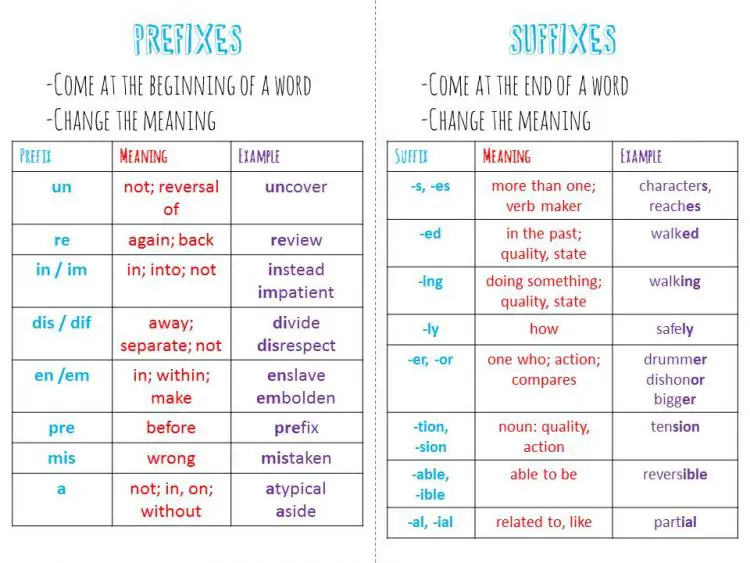
Look and learn!

Resultado de imagen de prefixes and suffixes chart

Page 14

VOCABULARY AN GRAMMAR
Do exercise b with the correct prefix or suffix.

Do the Practise exercises "English in use" 

Finally to strengthen contents Workbook page 7,8 and 9.


lunes, 16 de marzo de 2020

nivel 6 adultos La Punta

Hello students! we are going to work through this blog.Here you will find the content of our classes.

1).Today we are going to continue with  the class book on page 9 :
 You will have to do the vocabulary exercise working with American and British words.
Then as we went over questions and indirect questions last class ,you have to do the practise exercise on page 9.

2) Go to page 11 and do exercise : the writing task ,using phrases and expressions from the same page.

3)Workbook:

Page 2 : vocabulary and grammar exercise : to do this exercise  remember the differences between simple present and progressive and the stative verbs and their correct usage.

page 3: there you will find vocabulary exercises related to American and British words' differences.Complete exercise a and b.

Page 4 : In this page you will find exercises about questions and indirect questions.(we have already gone over it)

Page 5 : Exercise about collocations ,use the class book to help you. (vocabulary exercise)

Page 6: Do the writing exercise.

Hope you are all fine !


Ingles 3 Grupo 1 - Villa Mercedes

April 30th. 2020 Hello people!!! It's almost Friday!!! YEAAAAAAAH Today we are going to finish unid 5 and we will do a revision ...